
Designing for Credibility in a Mountain Town
What Performance Retail Demands in Places That Know the Difference
In mountain towns, authenticity has to be earned.
The customer knows the outdoor performance product.
They use it. Abuse it. Depend on it.
They can tell when a story has not been lived.
That is what makes retail in these markets unforgiving in the best way. Performative authenticity shows up fast. Design for the sake of design falls flat. Branding without backbone gets ignored.
In mountain towns like Breckenridge, Colorado, a retail store does not get the benefit of the doubt. It has to prove it belongs.
For Helly Hansen, the Red Thread is clear.
Trusted by Professionals.
In a mountain town, that promise is not abstract. It is tested daily by ski patrol, guides, instructors, and locals who rely on their gear in real conditions. These customers are not looking to be convinced. They are looking for alignment.
That changes the role of the store.
This is not a space designed to persuade.
It is a space designed to hold up.
Every decision has to quietly reinforce that this is gear built for people who know what they are doing. The store becomes proof of the brand promise, not an explanation of it.
Performance credibility is fragile.
The moment a space feels overstyled, trust erodes.
Here, restraint does more work than spectacle.
Materials feel appropriate to the environment, not imported trends.
Fixtures support real gear and real use.
Flow respects locals on a mission and visitors with time to explore.
Lighting supports product truth, not drama for effect.
Nothing is trying to steal the scene.
The product and the use case are the main character.
When credibility is designed in, customers move differently. They slow down. They touch product. They trust what they are seeing.
A Victorian Home With Main Character Energy
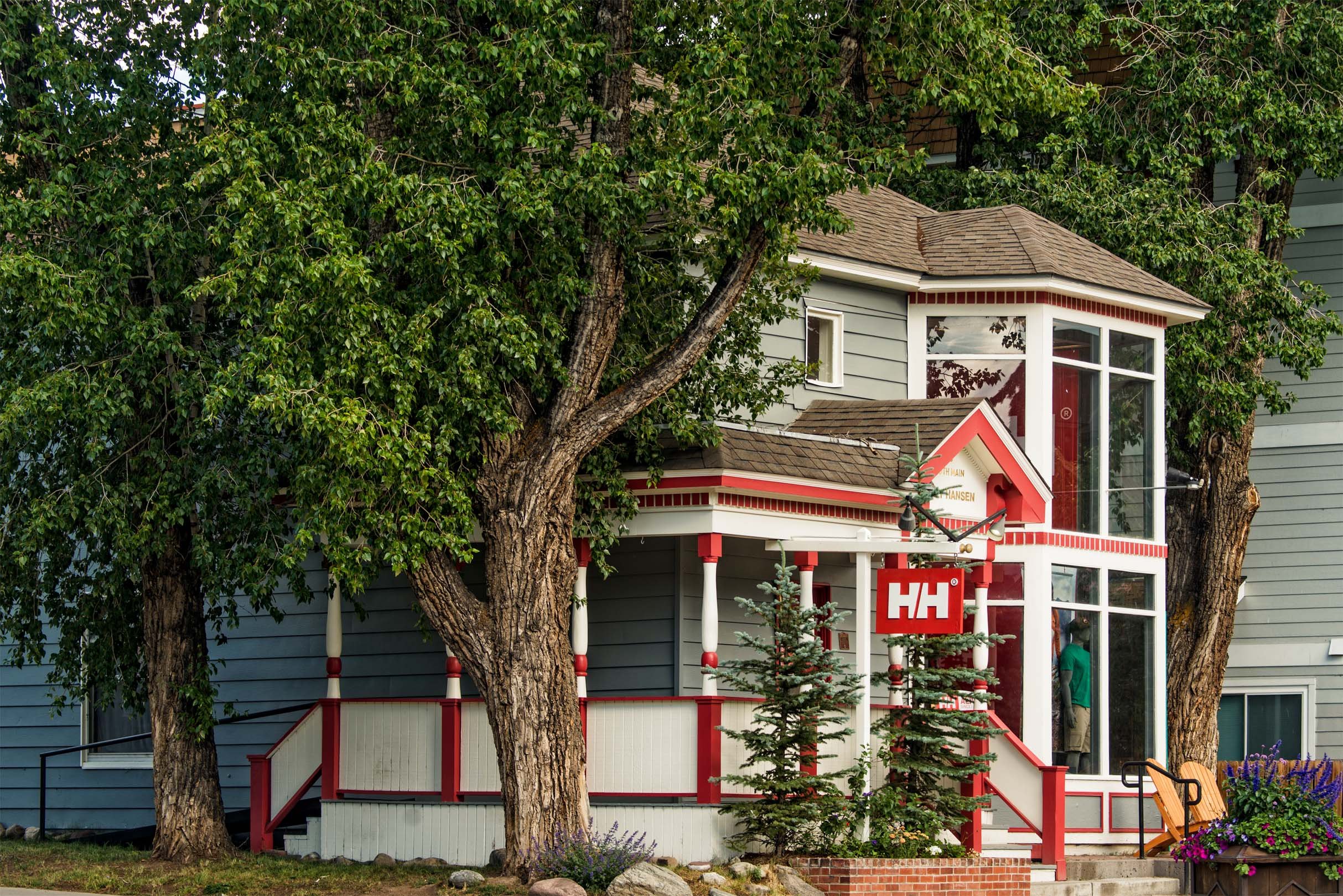
Placing the store inside a historic Victorian home was not something to work around. It was something to lean into.
In a town full of modern builds and base-area retail, the house immediately signals something different. It feels rooted. Earned. Established.
That architecture becomes part of the story.
Not as nostalgia for nostalgia’s sake, but as credibility.
The palette and detailing respect the bones of the building while letting Helly Hansen’s professional DNA come through. Warmth without softness. Structure without stiffness. Confidence without flash.
The result feels less like a retail insert and more like the brand belongs there. Like it has always had a seat in town.

The Discovery Happens On The Way Up
The real moment of discovery does not start when you reach the second floor. It starts on the stairs.
In a historic home, the ascent matters. Stairs are not just circulation. They slow you down. They shift your posture. They change your mindset.
That vertical movement creates a pause between modes. Between performance and place.
By the time customers arrive upstairs, they are already more observant. More open. More curious. The store has earned their attention without asking for it.
Upstairs still carries product, but the tempo changes. This is not high-density, grab-and-go retail. Product is given room. Seating invites pause. The environment allows for ski town nostalgia and cultural context without overpowering the brand.
It feels lived in.
Familiar.
Like a room you want to stay in,
not rush through.


Constraints As Defining Moments
Often, the greatest challenges in a retail space become its defining moments.
Stairs. Changes in elevation. Old buildings with opinions. These are the things most teams try to hide or neutralize.
We look at them differently.
When treated with intention, constraints slow movement, force decisions, and create natural moments of discovery. They are where authenticity shows up most clearly.
In Breckenridge, the vertical journey is not a problem to solve. It is an asset. It allows the store to hold two modes at once. Purpose-driven shopping below. Discovery, memory, and a different pace above.
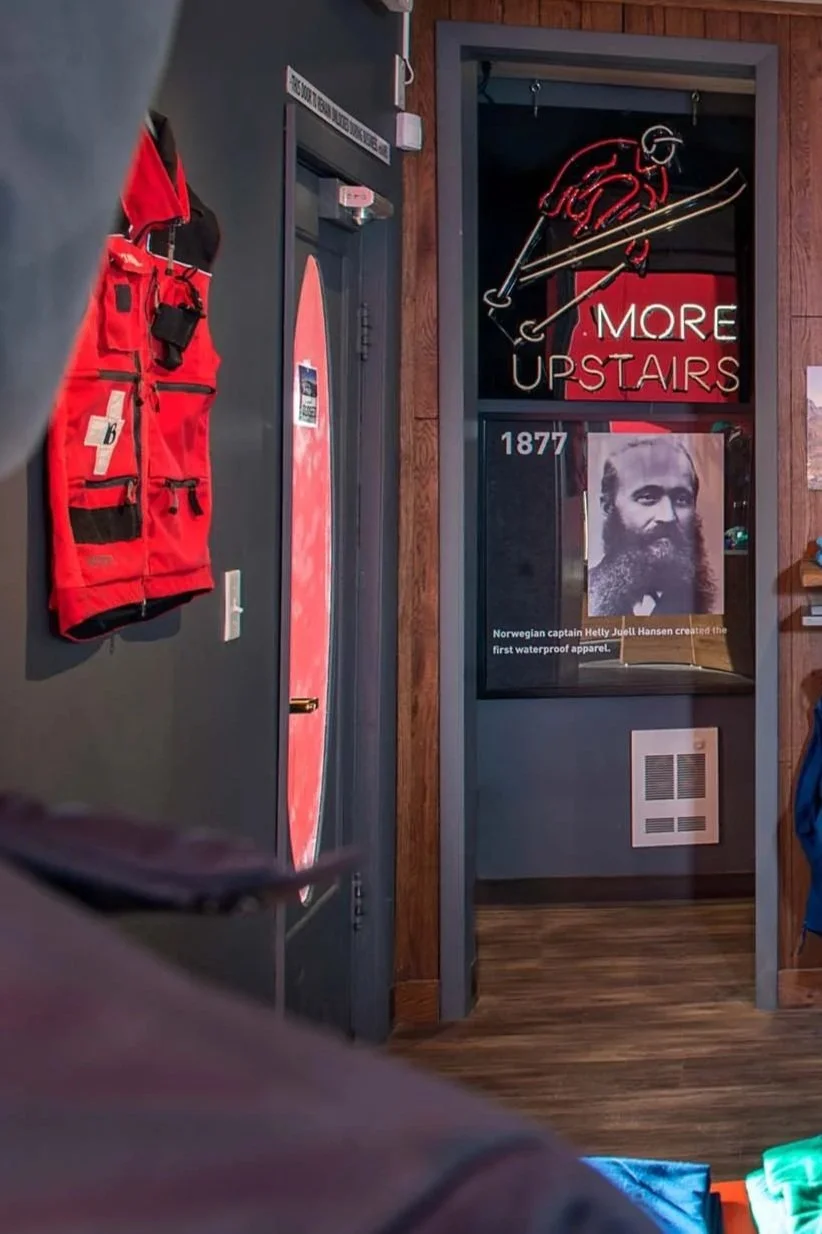
Some of the strongest retail experiences are built not in spite of these moments, but because of them.


Designing For People Who Know The Difference
Retail in mountain towns is not about layered storytelling. It is about alignment between promise and reality.
When the environment matches how the product is actually used, customers do not need convincing. They decide for themselves.
That is the advantage of credibility-led design. It removes friction and replaces persuasion with confidence.
This is where performance retail separates itself from lifestyle theater.
The PORTER Take:
Credibility cannot be styled at the end. It has to be designed, engineered, and built into the space from the start.
Mountain towns make that truth impossible to hide.
If you are building in a market where your customer knows more than you do, this is where experience matters. This is where the Red Thread has to survive real-world pressure.
That is the work we do.