
Sephora's Quiet Hours Prove Retail Design Is Never Finished
Confidence Was Always the Product
Years before founding PORTER, I worked with Sephora as the brand prepared to launch nail polish across its North American stores. The assignment was to develop the fixture, but the real work began with understanding what Sephora had already taught its customers to expect.
Sephora changed beauty retail by giving people permission to experiment. Traditional department store counters put the product behind glass and the sales associate in control. Trying something required a conversation, which meant the customer had to expose what she did not know before she could find out if a product was right for her. Sephora removed that barrier. Customers could touch the merchandise, compare options, test products, change their minds and keep exploring. The environment made discovery feel safe.
That expectation created a particular challenge for the nail category. The fixture needed to hold a large assortment of polish while preserving the freedom customers experienced everywhere else in the store. They wanted to see how a color looked against their skin, but opening bottle after bottle was impractical. We developed a clear acrylic rim around the fixture with painted nail samples. A shopper could place her finger beneath one and immediately get a sense of the color on her own hand.
It was a small detail, almost invisible unless you used it. Yet it protected one of the most important things Sephora had built: confidence. The fixture answered the question customers were already asking and allowed them to keep moving at their own pace.
The Project That Changed Everything
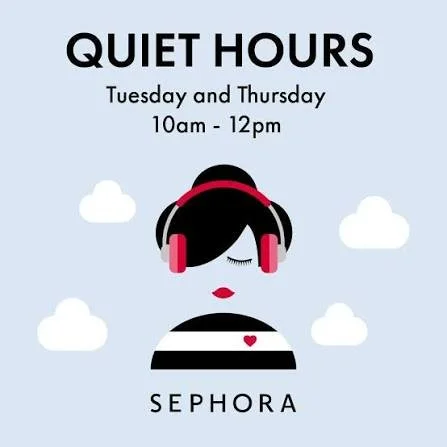
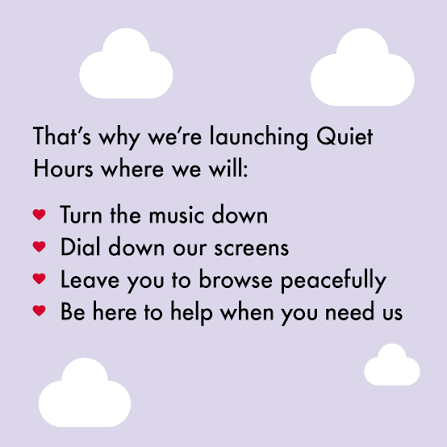
That experience came back to me when Sephora announced the global rollout of Quiet Hours this summer. Following a pilot in 32 stores across eight markets, the brand is introducing scheduled periods with lower music, fewer screen distractions and minimized scents. The program was shaped through conversations with neurodivergent and sensory-sensitive shoppers who described how overwhelming beauty retail could feel.
The announcement has rightly been recognized as a meaningful step toward more inclusive retail design. What interests me most, though, is how familiar the instinct behind it feels. Sephora is once again asking what gets in the way of exploration, then adjusting the experience to remove it.
Quiet Hours also follows an earlier experiment in some European stores where red and black shopping baskets communicated whether a customer wanted assistance or preferred to browse alone. The system gave shoppers control over an interaction that can be uncomfortable for customers and difficult for employees to read. The solution was simple enough to feel obvious once someone had thought of it.
The nail samples, the baskets and Quiet Hours look unrelated when viewed as individual retail ideas. Together, they reveal a remarkably consistent understanding of Sephora's customer. Beauty can be intimidating. Purchase decisions feel personal. People become more open to discovery when the environment gives them control.
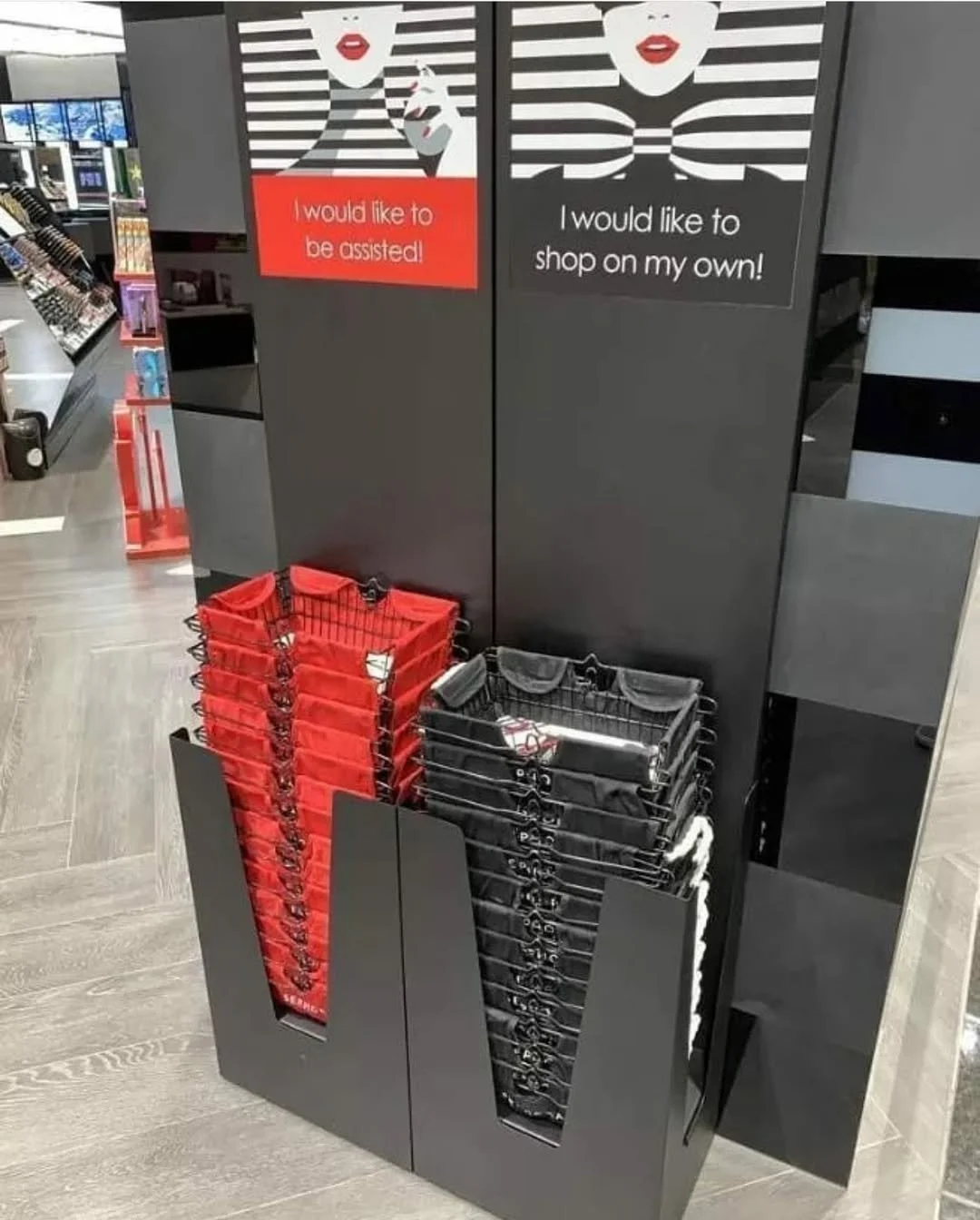
Image by Mad Over Marketing
Opening Day Starts the Research
Most stores are still treated as finished objects. Months of strategy, design, engineering and construction lead to opening day, followed by photography, celebration and a quick pivot to the next location. Unless something breaks or sales disappoint, the original experience can remain largely untouched for years.
The problem is that customers have not entered the process yet.
Every retail environment opens with a set of informed assumptions about how people will move, where they will pause, what they will understand and when they will want help. Some of those assumptions prove accurate. Others unravel as soon as real customers begin using the space. They walk past the display everyone expected to become a destination. They repeatedly ask employees a question the signage was meant to answer. They test products in an unanticipated way or create a shortcut through a journey that made perfect sense on the plan.
None of this means the design failed. It means the store is finally producing information that could not exist before opening. The danger comes when no one is responsible for noticing it.
Brands collect plenty of performance data, but the most useful clues are often hiding outside the dashboard. They live in the explanation employees repeat throughout the day, the fixture customers use differently than intended and the point in the journey where confidence gives way to hesitation. Those moments reveal how the experience is working in real life. They are also where the next design decision begins.
The Red Thread Has to Move
At PORTER, we use the Red Thread to describe the strategic idea that carries through every part of a retail experience. It's a big part of what makes us a retail experience agency rather than just a design firm. It creates continuity from the initial business objective through design, engineering, production and installation. That continuity matters after the doors open too.
A Red Thread should never lock a store into its first expression. Its job is to protect the thinking beneath the design so the environment can respond without losing its identity. For Sephora, the enduring idea is not a fixture type, a color palette or a particular service model. It is the belief that customers should feel comfortable enough to explore beauty on their own terms.
That belief has taken many physical forms because the brand has continued to learn. A try-on behavior informed a fixture detail. A preference for autonomy became a basket system. Feedback from people experiencing sensory overload led to quieter shopping periods. Each solution belongs to its moment, while the thinking behind it remains recognizable.
This is what consistency looks like when a brand is alive. It is not the repetition of a design decision long after the reason for it has disappeared. It is the ability to recognize a new need and respond in a way that still feels unmistakably true to the brand.
Still Listening
You do not need Sephora's scale to practice this kind of curiosity. Visit stores after opening. Spend time with the people working in them. Notice where customers hesitate and what they improvise. Ask employees which displays require constant explanation, which products are difficult to demonstrate and what shoppers request that the environment does not currently provide.
Then treat those observations with the same seriousness given to the original brief.
Sephora's Quiet Hours matter because they make shopping more comfortable for people who have often had to tolerate environments that were never designed with them in mind. They also demonstrate something every retailer should consider. A store can be fully built and still have more to teach you.
Construction eventually ends. Listening should be part of what happens next.
If your space hasn't changed since opening day, that might be the actual opportunity. Let's talk about what your customers have been trying to tell you at thisisporter.com/connect.