
Shop-in-Shop Strategy: Building Brand Presence Before Scale
For many retail brands today, shop-in-shop retail strategy isn't a follow-up move.
It’s the first real one.
Before a flagship. Before a full retail rollout.
That’s what makes shop-in-shop such a high-stakes moment. When this is the first place a customer experiences your brand in person, presence matters more than size. The space has to communicate who you are, what you stand for, and why you belong there, all in a matter of seconds.
This isn’t about doing more. It’s about getting it right.
Why Brand Presence Matters in Shop-in-Shop Retail
A shop-in-shop often functions as a brand’s first handshake with a physical customer. It sets expectations. It establishes credibility. It signals whether the brand understands itself well enough To show up with clarity.
If the environment feels generic, the brand feels generic.
If the story is unclear, the product has to work harder than it should.
Presence is built through intention. What the space prioritizes. What it leaves out. How it guides the customer without overwhelming them. Those decisions have to be made early and held consistently, especially inside a shared retail environment.
This is where the Red Thread matters. It’s the throughline that connects brand, customer, and environment, keeping decisions aligned from strategy through execution.





Small Spaces Carry More Responsibility
When shop-in-shop is the starting point, there’s no room to hide.
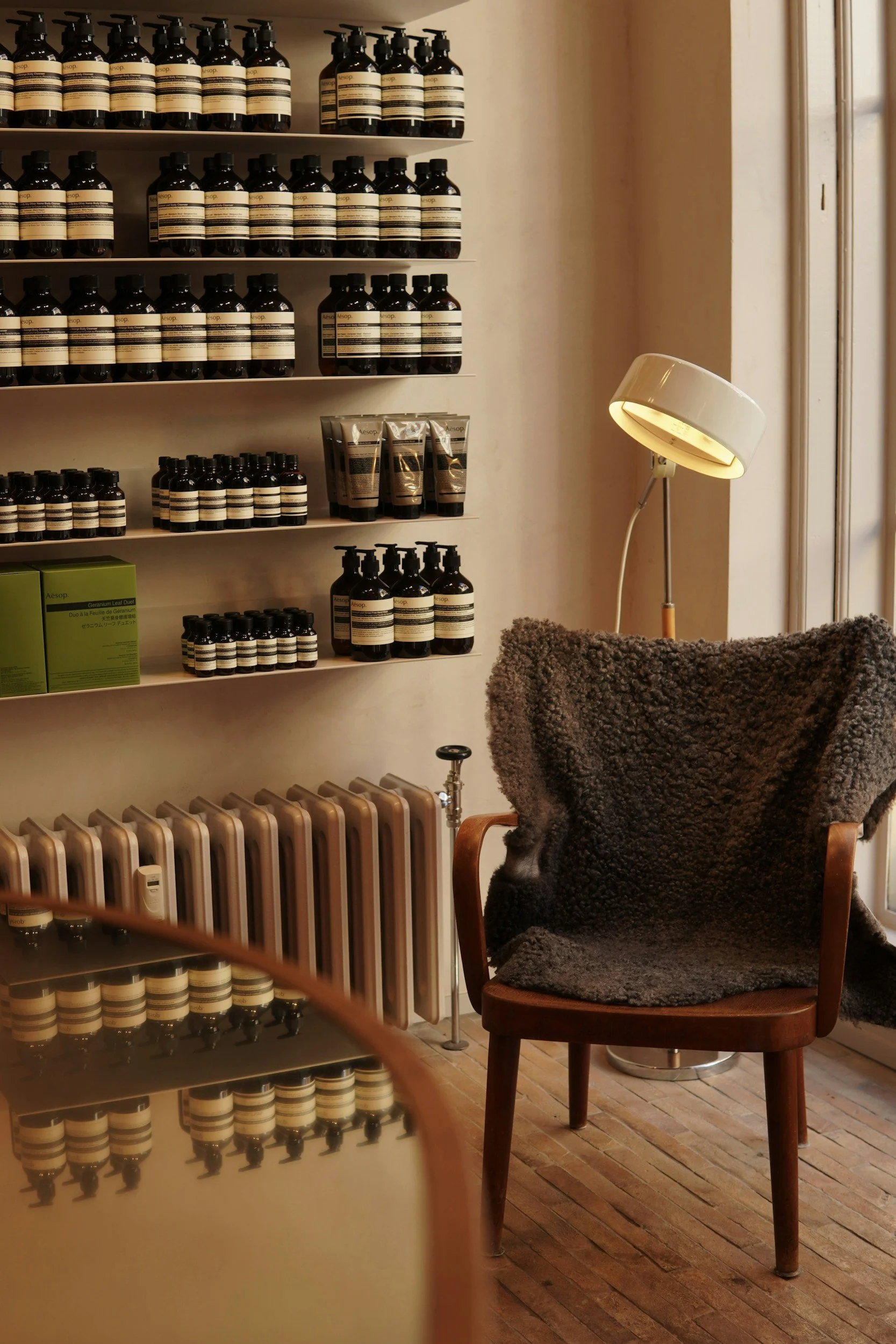
Every element has to do more because the space has to function as a destination inside the store. The layout needs to invite and orient the customer immediately.
Messaging has to be clear, balanced, and easy to maintain. Fixtures have to support experience and versatility without constant intervention. And when the brand isn’t managing the space day to day, the system has to be bulletproof enough to protect the story through floor sets, resets, and daily retail wear.
Weak thinking shows up fast in small spaces. A poorly considered shop-in-shop doesn’t just underperform. It introduces the brand incorrectly. And first impressions in physical retail are hard to undo.
That’s why these environments demand discipline. Design has to respect constraints. Engineering has to anticipate real-world use. Execution has to hold the original intent without erosion.
Presence isn’t created through decoration. It’s created through clarity.

Ariat As Proof Of Intentional Presence
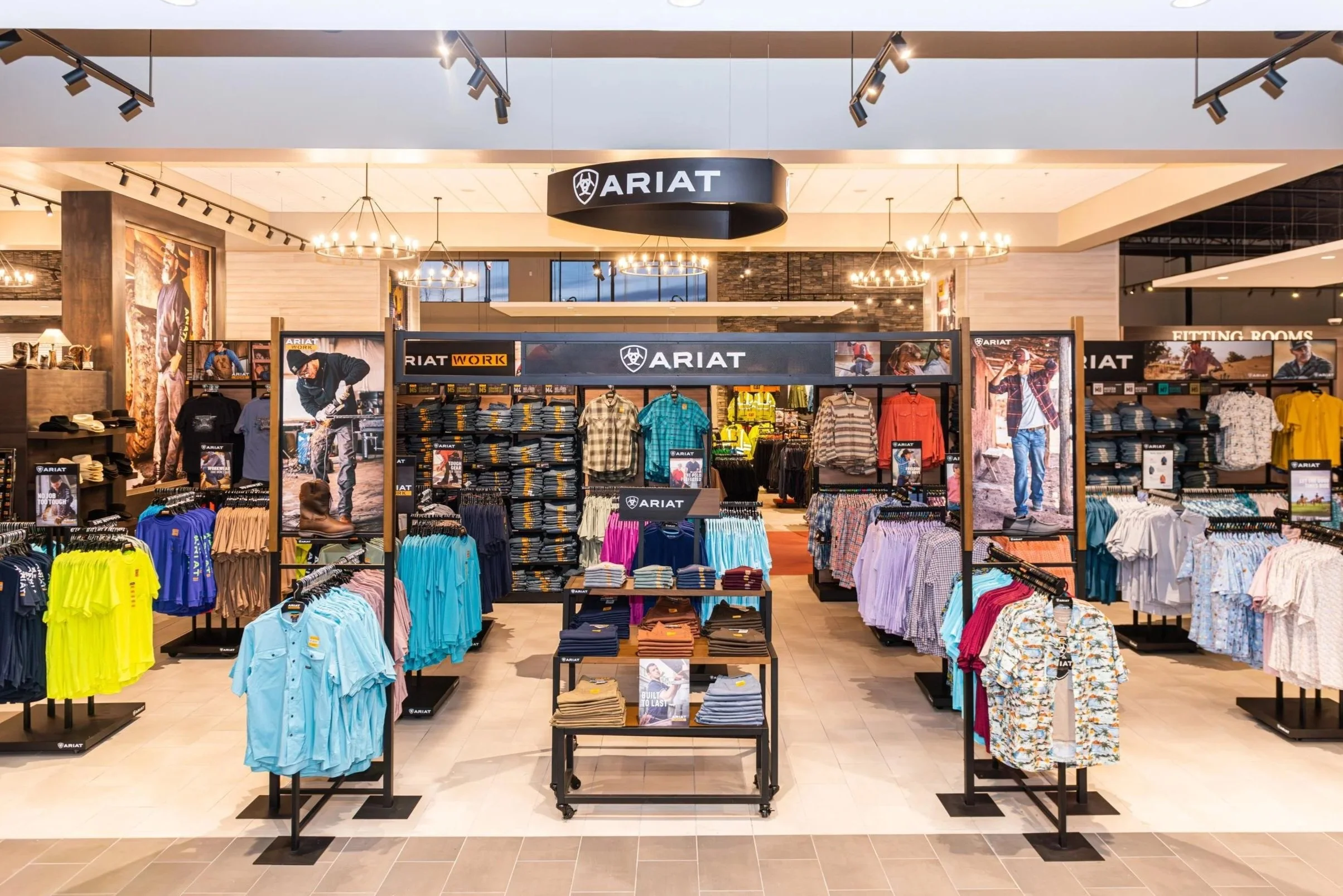
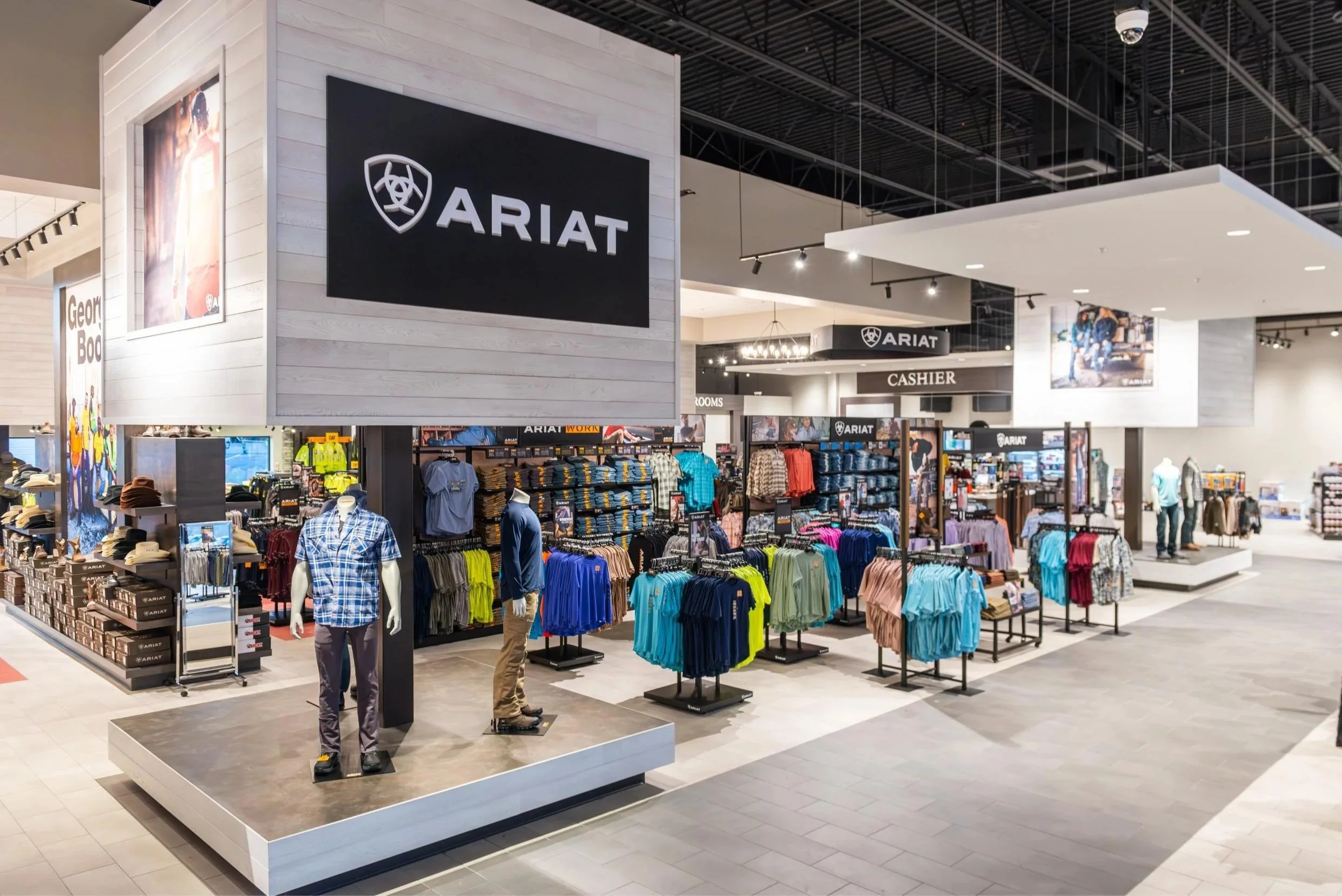
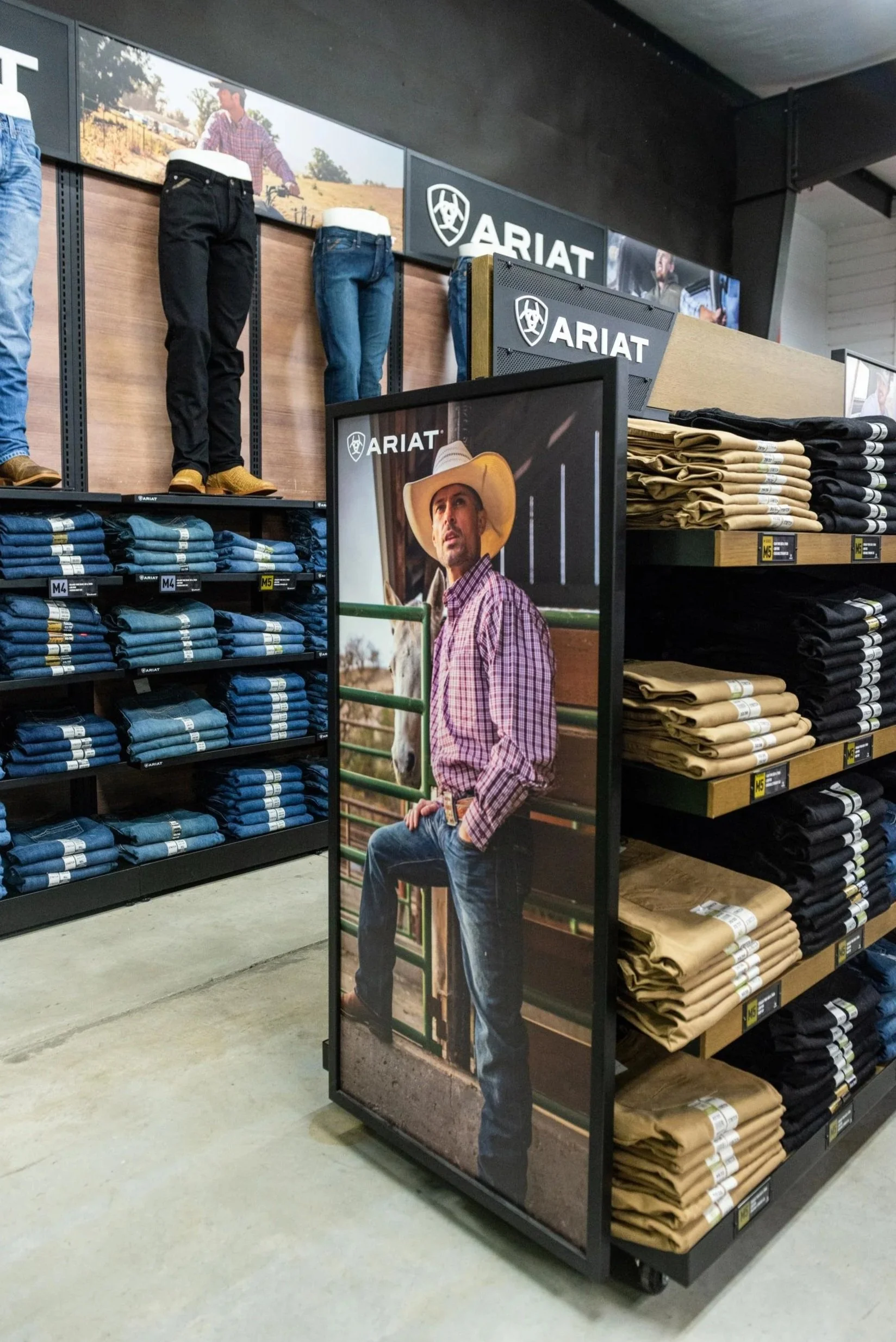
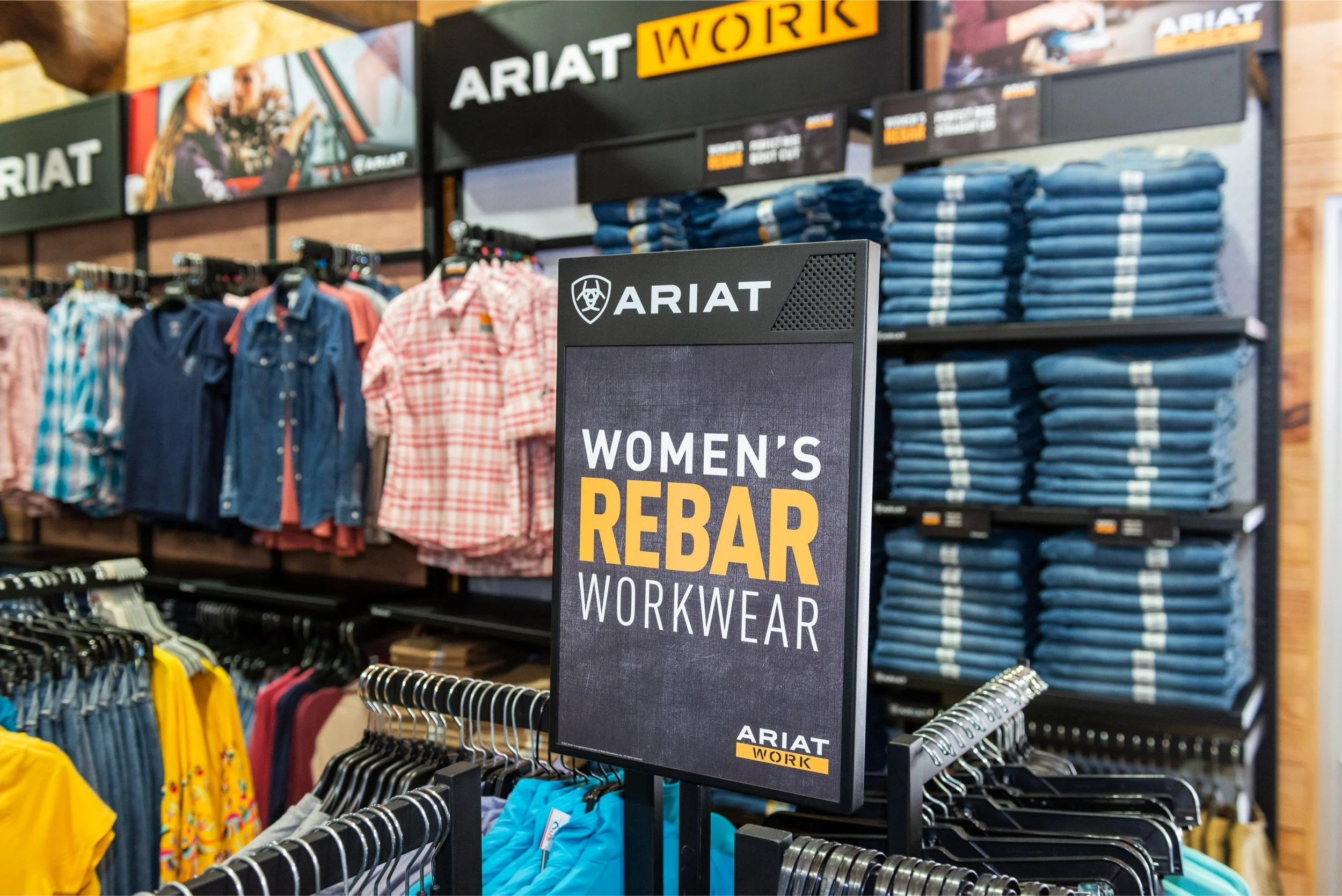
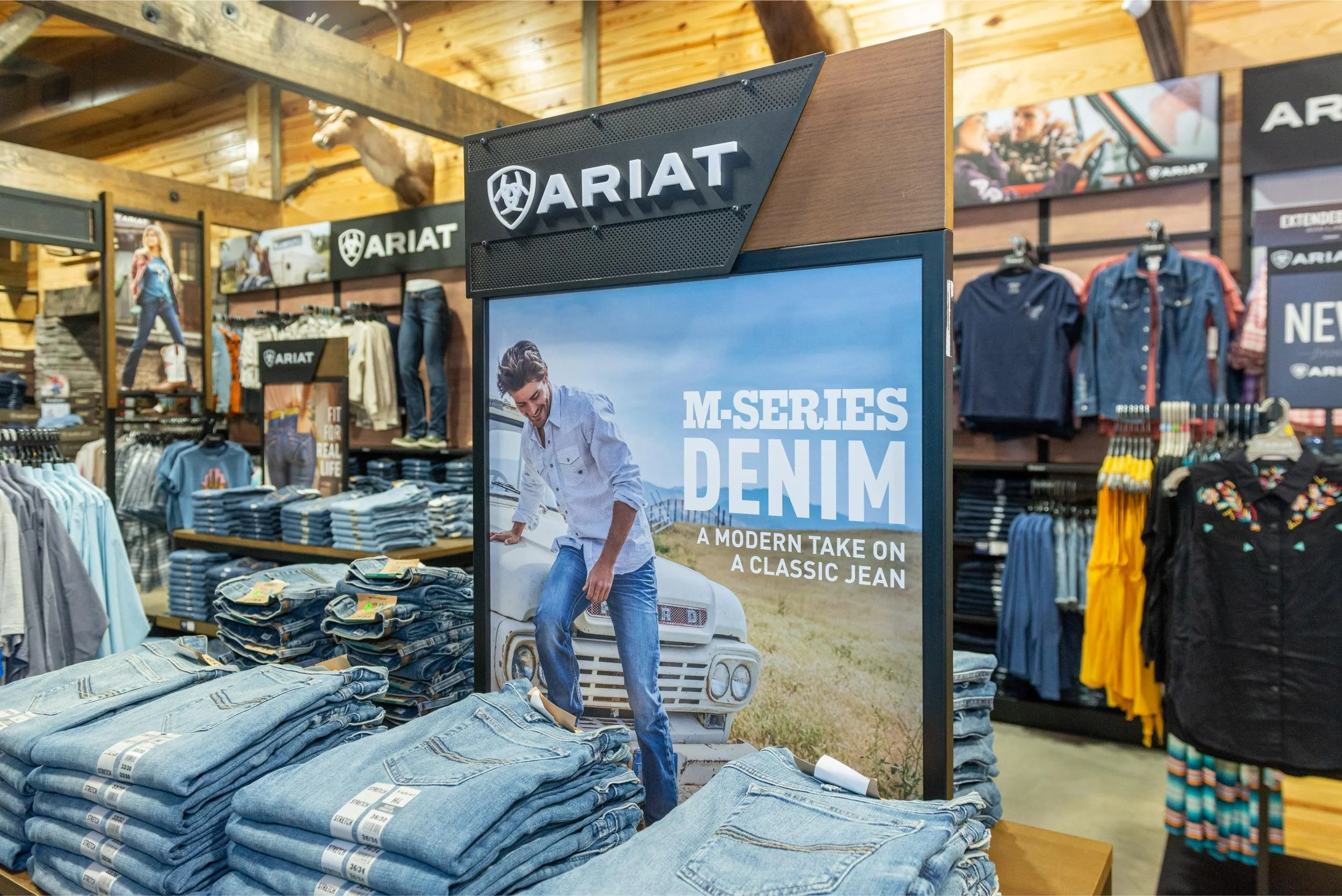
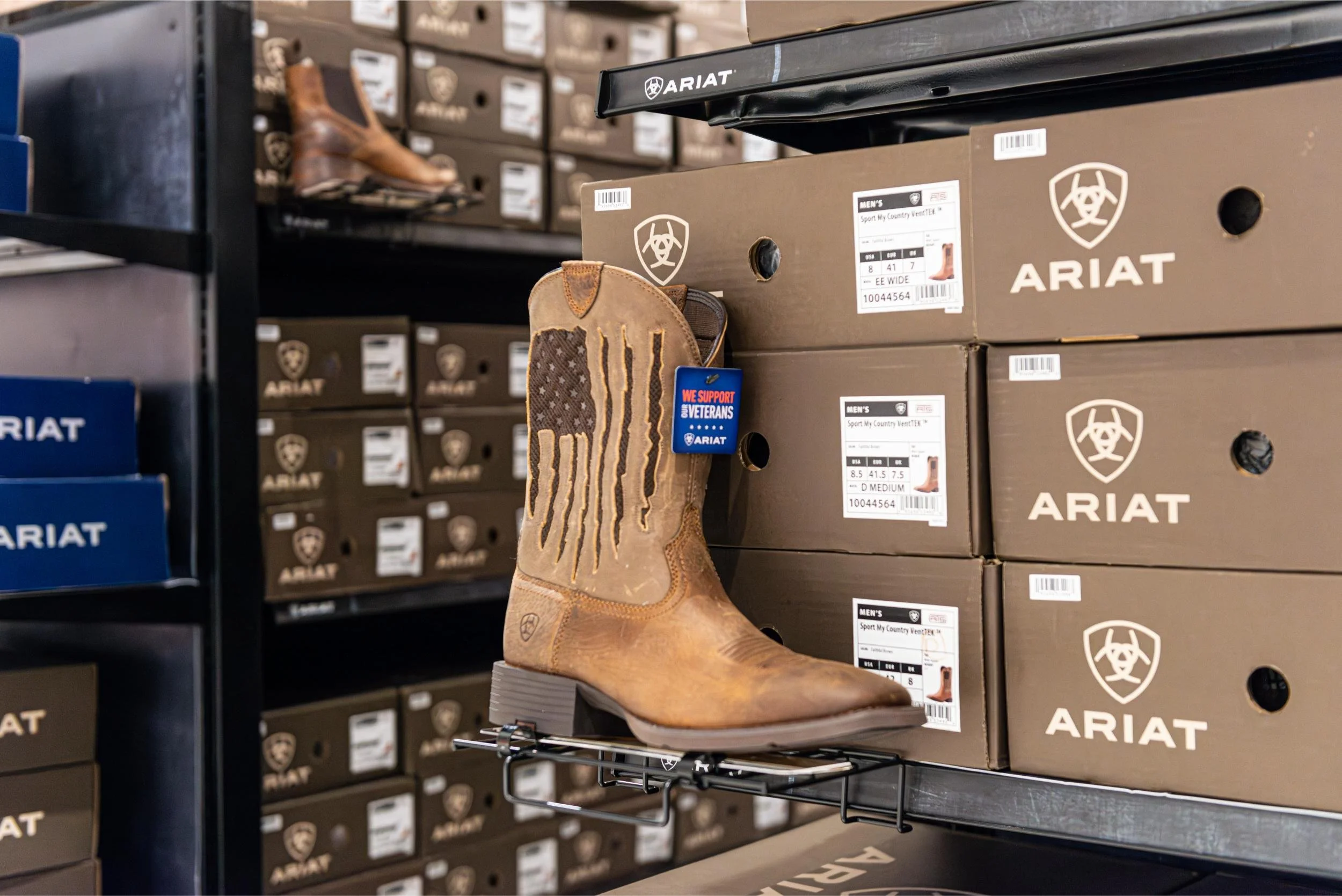
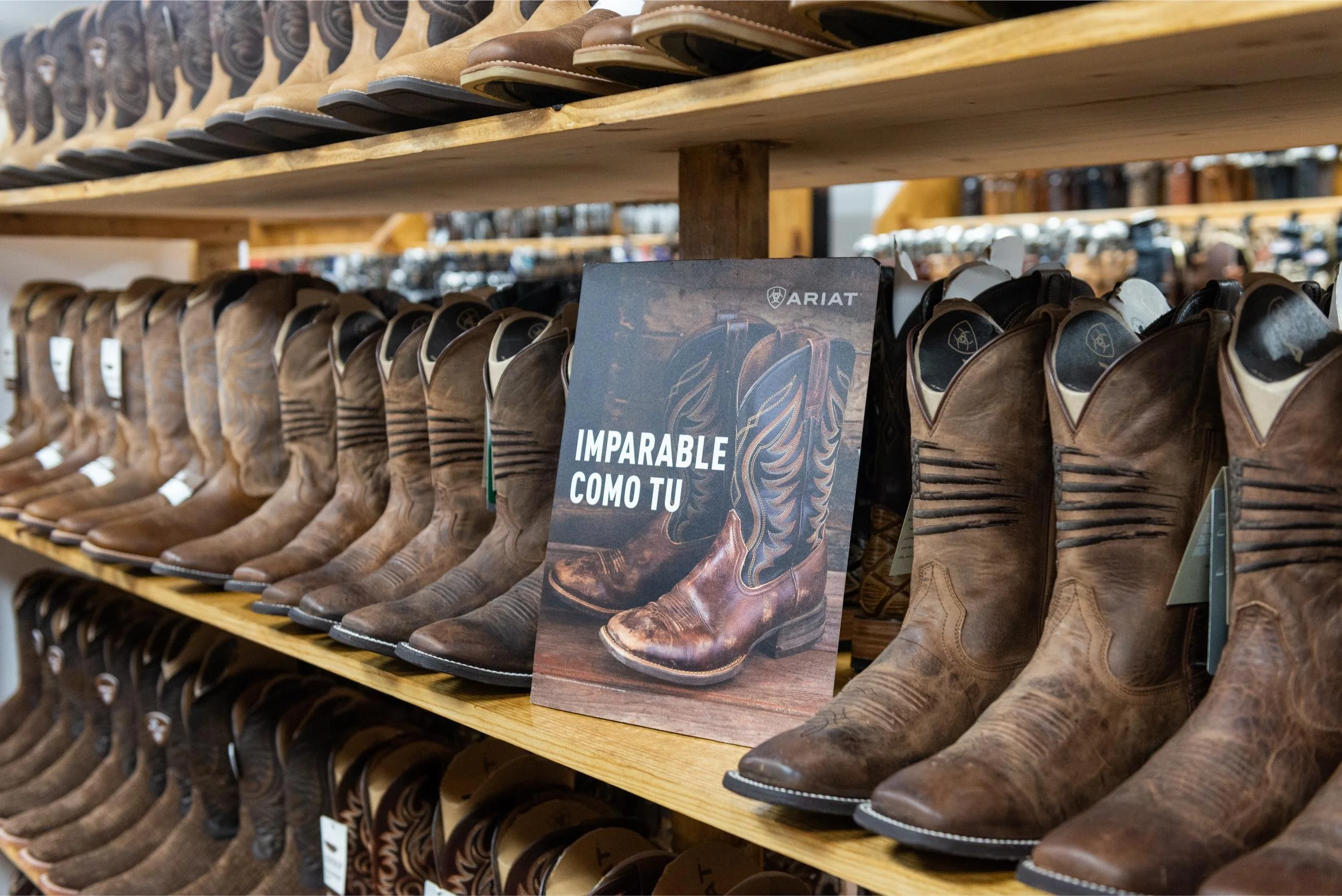
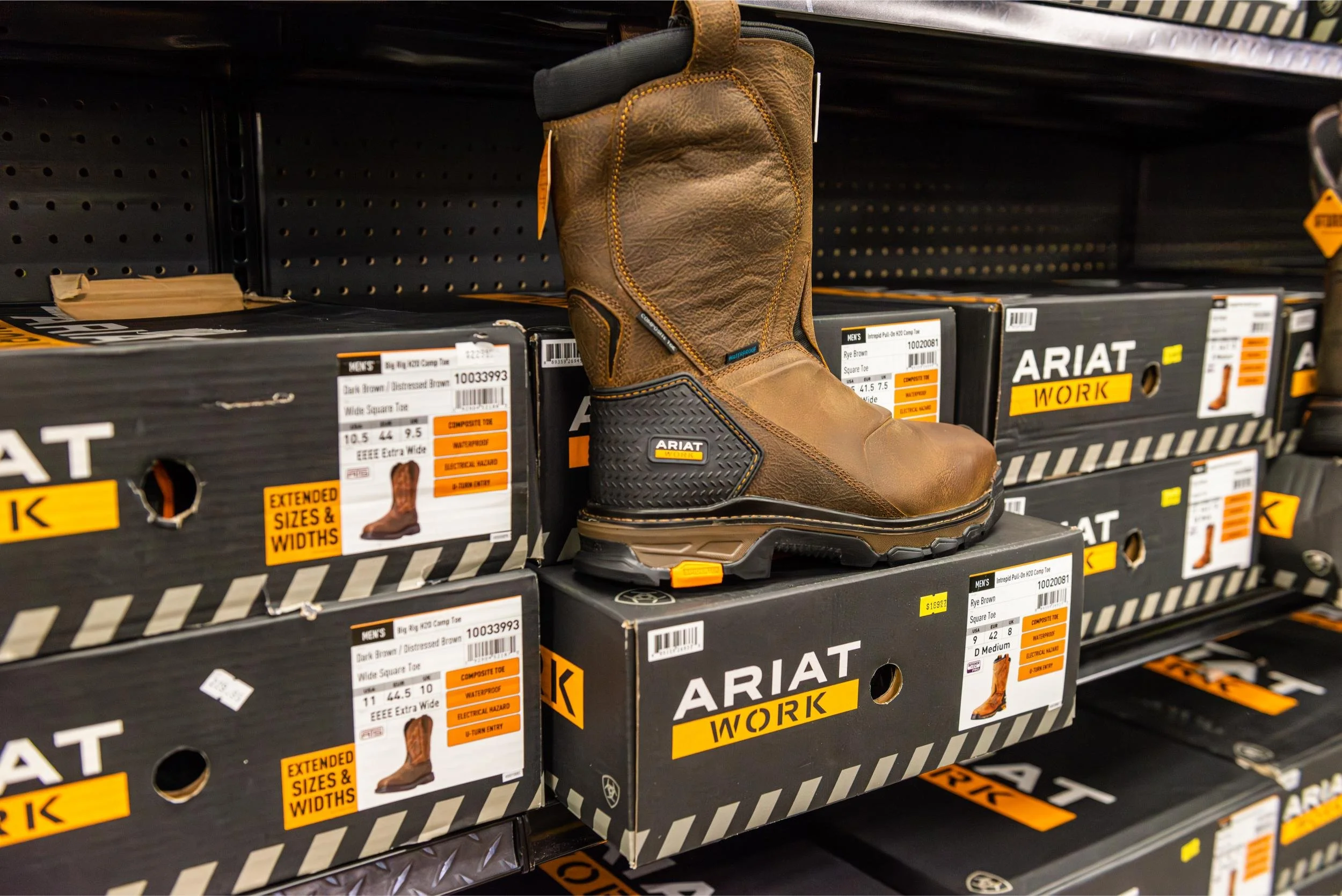
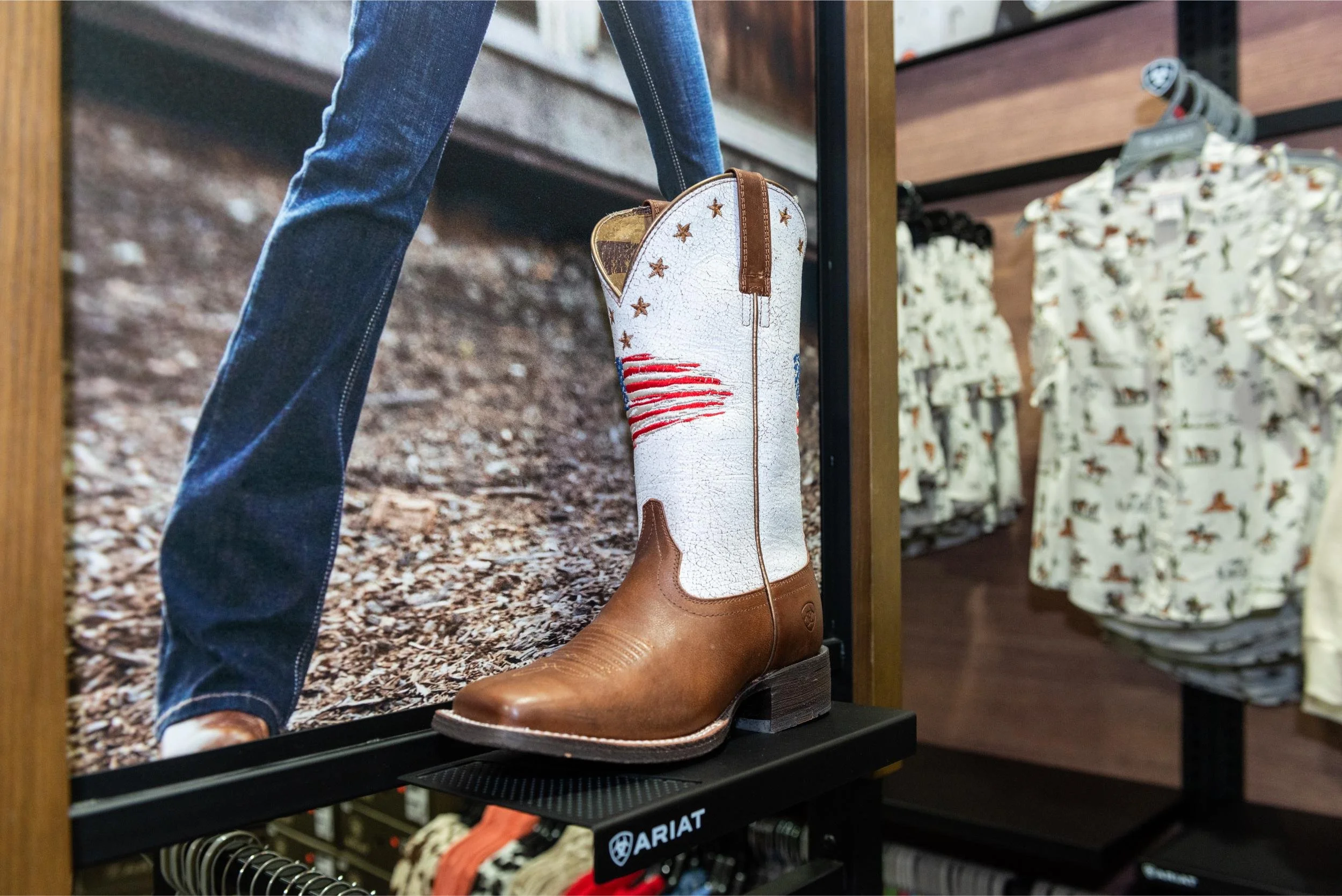
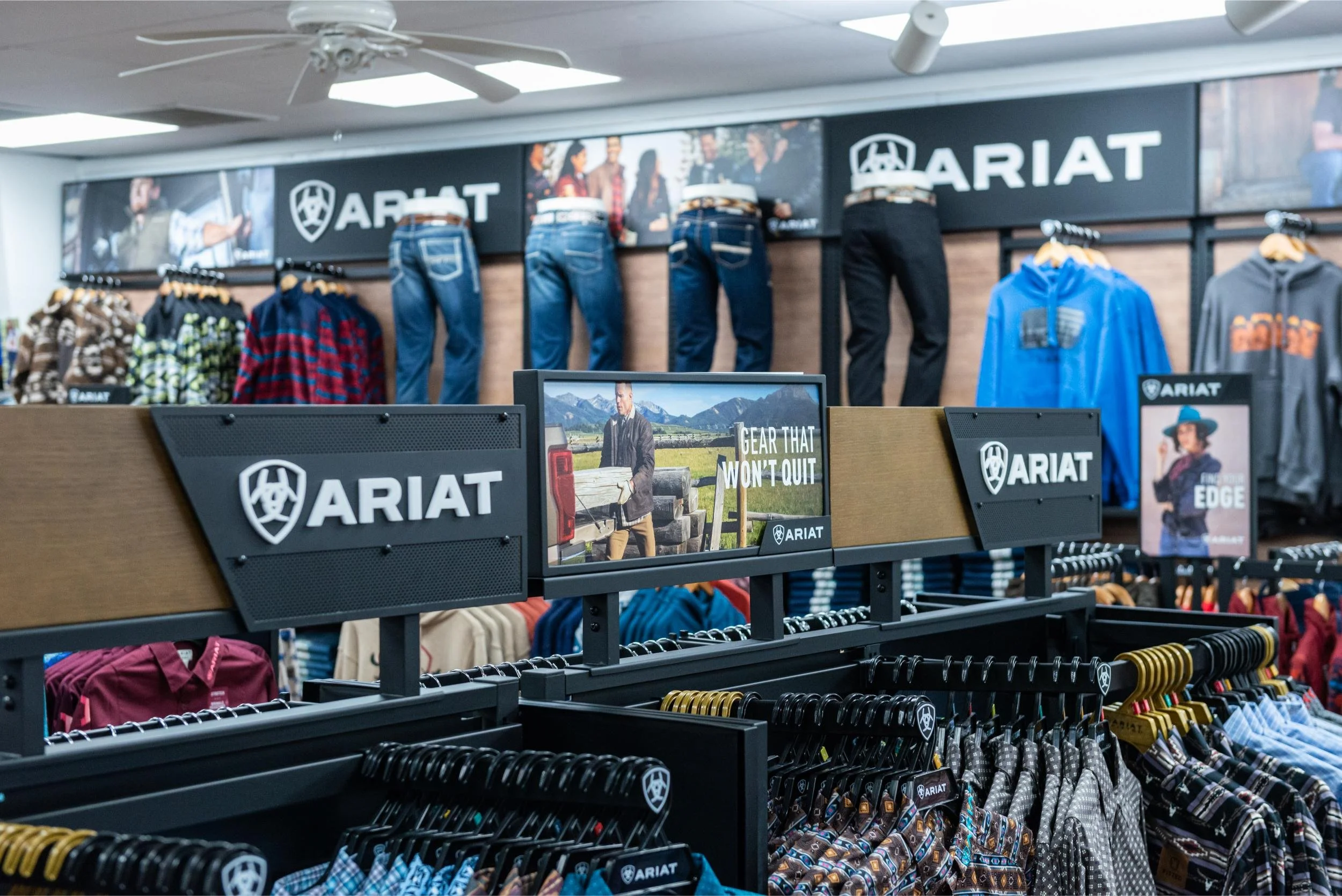
For Ariat, shop-in-shop came long before the first flagship. It wasn’t about replicating a store. It was about introducing the brand clearly and confidently inside wholesale environments customers already trust.
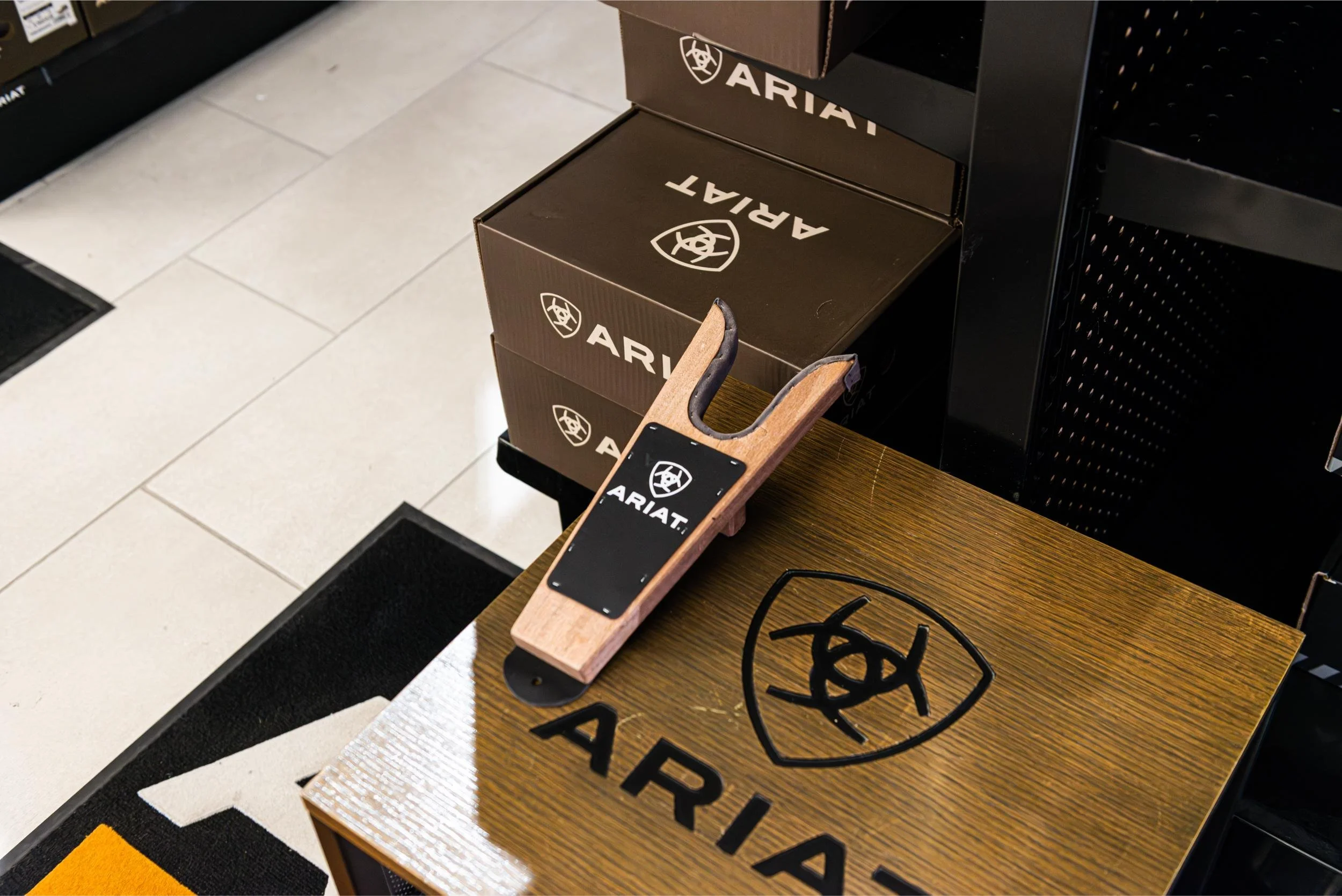
The space needed to communicate performance, durability, and purpose immediately. That meant strong branding, flexible merchandising tools, and fixtures engineered to work hard in real retail conditions.
Nothing extraneous. Nothing unresolved.
The result was an environment that felt owned, not inserted. The brand was instantly recognizable without overpowering the host retailer. Customers understood the product, the use case, and the point of view within seconds.
That’s what presence looks like when it’s done with intention.
Why This Model Works When It’s Treated Seriously
A well-executed shop-in-shop does three things.
It introduces the brand with clarity.
It earns trust through coherence and craft.
It establishes a foundation future retail expressions can build on.
When presence is defined early, scale becomes possible later. But scale only works when it’s built on something solid.
The PORTER Take
We treat shop-in-shop as a first impression.
Small footprint. High responsibility.
Because when shop-in-shop comes first, strategy can’t be abstract. It has to live in the space, survive real conditions, and make sense to real customers.
That’s how brands show up with intention
And that’s how presence is built, before scale.
If you’re planning a shop-in-shop and want it to function as a true brand destination, not just a display, PORTER can help. Let’s talk.